Overview
You know that feeling when you want to get out… but it’s winter, the mountains look unreal, and your brain starts doing that annoying math?
“Is this going to be epic… or am I about to spend four hours digging, sliding, and regretting my life choices?”
Because winter wheeling isn’t the same as summer. The stakes feel higher. Traction is weird. Snow hides what you’d normally read from ten feet away. And the line between “this is fun” and “this is a recovery scenario” is… thinner than people admit.
That’s the point of this post.
Not to hype you up with bravado. Not to pretend every trail is magically open and perfect all winter. But to give you five Colorado-area ideas that can make winter runs genuinely fun, plus the mindset that keeps them from turning into a cold, dumb lesson you didn’t ask for.
And yes—some of these are iconic, “earned it” trails… and some are the kind of winter-friendly zones experienced locals quietly use when the high country is locked up.
We already have a series of such posts, if you are interested:
The Ultimate Summer Trail Guide for 4x4 Enthusiasts.
Top Colorado 4x4 Trails That Make Fall the Best Season
Top 4x4 Trails That Make Fall the Best Adventure Season
Underrated Off-Road Trails and How to Prepare for It
Now let’s get into the Winter trails…
Sky-High Switchbacks and That “Earned It” Finish Best Trails in Colorado
Imogene Pass | Why It’s Special & What You Need To Know
Let’s be adults for a second: Imogene Pass is usually a no in true winter. It’s a high mountain pass, and closures are normal—sometimes fully closed even beyond winter due to conditions and maintenance.
So why include it in a winter post?
Because it’s the North Star for “high-alpine Colorado wheeling” and it belongs on your winter radar in a very specific way: shoulder-season windows, early/late storms, and the reality that some years you’ll be planning around closure status instead of your wish list. That’s winter. And pretending otherwise is how people end up stuck above treeline acting shocked that snow exists.
When it is open, it’s a full-senses trail—tight shelf exposure, steep switchbacks, altitude, and views that feel fake. It’s also one of those lines where small mistakes get expensive fast, so if you’re chasing big scenery, treat it like a serious objective: check status, run daylight, bring recovery gear that actually works in cold, and don’t assume your tire choice from July translates to snow and ice.
This is also where a good Сolorado jeep trails map habit matters. You’re not just “going up a pass.” You’re managing route options, turnarounds, and the fact that cell service won’t save you when your rig decides it’s nap time in a drift.
If your crew wants the “winter version” of Imogene Pass, the move is simple: plan it like a maybe, not a promise. If it’s closed, you pivot to lower-elevation terrain that still delivers a real off road driving experience without pretending you can out-muscle mountain weather.

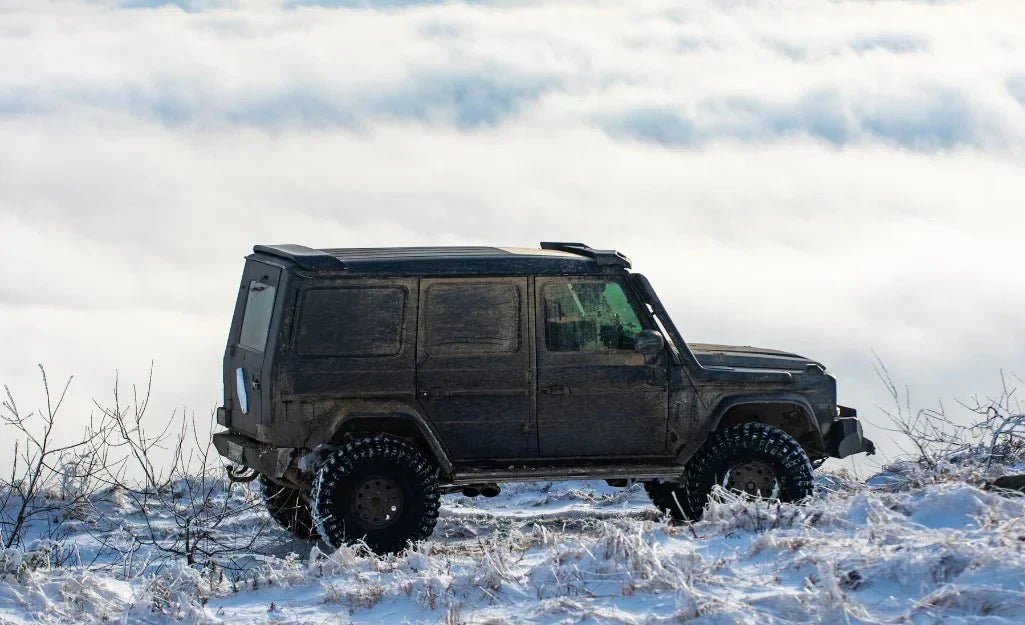
*San Juan Mountains winter views near the Imogene Pass area
Cold-Weather Rock Crawling That Still Delivers Colorado 4x4 Off road
Chinaman Gulch | Why It’s Special & What You Need To Know
This is where winter gets fun in a different way.
Chinaman Gulch is popular partly because it often sees minimal snow compared to higher alpine routes, which makes it a go-to winter destination when bigger passes are buried. Translation: you can still get a real day of technical driving without rolling the dice on deep drifts above treeline.
Here’s why it’s worth talking about for experienced drivers: it gives you choice. You can run lines that feel “warm-up technical,” then step into harder obstacles if your rig and your nerve are actually built for it. Winter adds spice—rocks get slick, shaded sections hold ice, and your throttle control gets tested in a way summer doesn’t force.
This is where people learn (or re-learn) that is 4wd good for ice is the wrong question. The right question is: can you drive like traction is limited even when your drivetrain is capable?
Because yes, you can absolutely have 4x4 in ice moments here. And if your plan is “just hit it with more throttle,” winter will correct you—loudly.
If you want a trail that feels like practice for real winter competence, not just winter vibes, this is it. It’s also a great place to prove your setup—not in a dramatic way, but in a “do my tires, gearing, and steering actually behave when things get slick?” way.

High-Desert Routes That Don’t Stay Buried Winter Overlanding Colorado
Texas Creek Recreation Area | Why It’s Special & What You Need To Know
This is one of the smartest winter moves in Colorado: go where the snow doesn’t hang around.
Texas Creek Recreation Area is often rideable year-round because it doesn’t get much snow, and what it does get usually melts quickly. That’s straight from the Bureau of Land Management description, and it matters.
Because winter doesn’t always need to be a blizzard story.
Sometimes you want a sunny, cold-day run where the ground is mostly workable, the views are big, and you’re not gambling your whole weekend on whether a shaded corner is secretly a skating rink.
This area gives you variety—multiple routes, different difficulties, and the kind of terrain where you can actually test gear choices: airing down, picking lines in loose rock, managing momentum without wheelspin, and seeing how your rig behaves when temps drop but the trail stays mostly drivable.
It’s also a solid option if your winter plan includes off road camping or 4x4 camping. Not in a Pinterest way—in a real way: cold nights, simple setups, and the kind of trip where you learn whether your storage, power, and recovery kit are practical or just optimistic.
If you’re the person searching drivable trails near me in winter, this is the type of place you end up loving because it keeps you moving when the high country is locked.
Close-to-Town Snow Challenge with a Wild Feel 4x4 Denver Colorado
Slaughterhouse Gulch | Why It’s Special & What You Need To Know
This is the classic “Denver-area winter itch” trail—close enough to do without turning it into a full expedition, but still capable of humbling people who show up casual.
And here’s the key winter truth: closures are real. The South Platte Ranger District lists Crow Gulch/Slaughterhouse (NFSR 101) as closed from January 1 to June 15, with weather-dependent extensions possible. 
So the right way to include this trail in your winter planning is: it’s a great idea when it’s open and a great reminder that winter wheeling near Denver isn’t just about snow depth—it’s about seasonal management rules and protecting roads from getting destroyed during the wrong time of year.
When it is open, it’s the kind of run that can deliver that “snow wheeling” satisfaction without requiring a full-day mountain pass commitment. You’re dealing with ruts, tight trees, off-camber moments, and that sneaky kind of traction loss where everything looks fine until your rig starts drifting sideways like it has plans.
If you want the closest thing to “practice winter driving” in a real off-road context near Denver, this is the vibe—just don’t build your weekend around it without checking status first.
And yes: this is exactly why people keep searching 4x4 Denver CO every winter. They want something accessible that still feels legit. The win is being smart enough to check if it’s even legal to run that day.

Desert-to-Mountain Variety When the High Country Is Packed Off road Trips
Backway to Crown King | Why It’s Special & What You Need To Know.
We’re including this for one reason: sometimes Colorado winter says “no,” and the best move is to pivot.
Backway to Crown King is a different kind of winter trail idea—lower elevation options, desert-to-mountain transitions, and the kind of route where you can still find cold-weather adventure without betting everything on deep alpine snow.
For experienced drivers, this is valuable because it resets your definition of a “winter run.” Winter doesn’t have to mean battling drifts. It can mean chasing terrain variety, running longer distances, dealing with changing surfaces, and still getting that challenge-and-payoff feeling.
This is also a good reminder that your rig build isn’t only about one state. If you’re dialing in Jeep offroad parts for durability, or investing in Toyota 4x4 parts because you want reliable long-haul capability, trails like this are where that matters. You’re not just crawling. You’re driving. You’re managing pace, heat, traction, fatigue, and planning like an adult.
And if your winter includes the “let’s make it a real weekend” approach—this is where your systems show up: navigation, spares, recovery, comms, and whether your crew actually likes you after hour six.
That’s not hype. That’s the difference between an epic off road experience and a cold argument in a turnout.

How To Drive in Deep Snow and Ice
Winter driving is less about courage and more about precision. The snow isn’t impressed by your build list, and ice doesn’t care what badge is on your grille.
So here are the actionable basics that keep winter runs feeling confident instead of sketchy—especially if your goal is four wheeling in snow without turning it into a recovery-themed hobby.
First: plan like traction is limited even when it looks fine. That means smoother inputs, earlier braking, and resisting the urge to “power through” when you don’t actually know what’s under the snow.
Second: momentum is a tool, not a personality. In deep snow, you want steady motion—enough to stay on top, not so much that you spin down into the base layer. If you’re asking how to drive in deep snow, here’s the simplest rule that holds up: pick a line you can maintain smoothly, commit to it, and don’t saw the wheel like you’re fighting the trail. Smooth steering keeps your tires biting forward instead of plowing sideways.
Third: respect shade. The sunny section you just cruised can turn into glass the moment you drop into trees. That’s where how to drive on icy roads with 4x4 becomes real: stay off the throttle mid-corner, avoid sudden braking, and let your drivetrain help you with controlled engine braking. Low range is not just for crawling—it’s for control.
Fourth: air down earlier than you think. Snow traction is about footprint and consistency. If you’re spinning, you’re digging. Air down, reassess, and try again before you trench yourself into a two-hour project.
Fifth: don’t rely on memory—rely on maps. Winter hides landmarks, buries turnoffs, and makes “we’ll just follow the track” a terrible plan. That’s why having real off road trail maps matters.
For navigation, this tool is the cleanest way to keep winter planning from turning into guesswork: onX Offroad app
And if you want a winter-specific breakdown (what changes, what to pack, how to think about snow runs), this is a solid external reference: onX snow wheeling / winter off-roading guide.
Now, the part people skip until it hurts: your rig setup. If you want your vehicle to feel predictable across terrain—snow, ice, rock, mixed conditions—this internal guide connects upgrades to real trail problems (not catalog fantasies): Build a Rig That Handles Any Terrain.
Because the goal isn’t “buy parts.” The goal is to make your rig behave when conditions are weird.
Final Thoughts
Winter wheeling can be ridiculously fun—if you treat it like winter.
Pick terrain that makes sense for the week you’re in. Check closures. Use real mapping. Drive smoother than your ego wants to. And build your rig so it stays predictable when traction disappears.
If you’re ready to gear up (or replace the one component you know has been sketchy for two seasons), start here: Best Deals.
That’s the easiest way to find the stuff you’ll actually use—armor, steering support, recovery, and the practical upgrades that make cold runs feel less like gambling and more like confidence.
And next time, we’ll go wider—same winter mindset, but across the rest of the U.S.


Leave a comment
This site is protected by hCaptcha and the hCaptcha Privacy Policy and Terms of Service apply.