Overview
If you’ve ever watched KOH and thought, “Cool… but what does this do for my rig?” — this post is the answer. You’ll get the quick context (including where is king of the hammers). Then we’ll break down what KOH actually builds in drivers: the priorities they learn the hard way… when to preserve momentum, when to slow down, and what mistakes cost the most. Not “inspiration,” but practical decision-making you can copy on weekend trails.
Finally, we translate that into a clean “mod order” you can follow: what to do first, what can wait, and what’s mostly a distraction. If your build budget is real (and it is), this is how you stop paying for mistakes twice… by copying the survival-first priorities.
Table of Contents
✅ KOH in One Minute: The Toughest Mixed-Terrain Off-Road Week in the World
✅ 20 Years Built in the Desert: What That Really Means in Johnson Valley
✅ How KOH Builds the Next Generation: Skills, Confidence, and Rig Modding
✅ Watch the Pros, Steal the Priorities: The ‘Mod Order’ KOH Teaches
KOH in One Minute: What the Hammer race Really Is
King of the Hammers is basically the off-road world’s most honest “proof of work.” It’s a week of one-day races where the same build has to survive high-speed desert punishment and slow, technical rock crawling that exposes every weak decision you’ve ever made with a wrench. It started as a bragging-rights throwdown and grew into a full-on motorsport ecosystem… Ultra4 racing, multiple classes, and a culture where durability and driver judgment matter as much as horsepower.
If you’re wondering how KOH turned into this, the King of the Hammers About Us page gives you the clean backstory. Then you can hop over to the official King of the Hammers YouTube channel to watch a few runs.
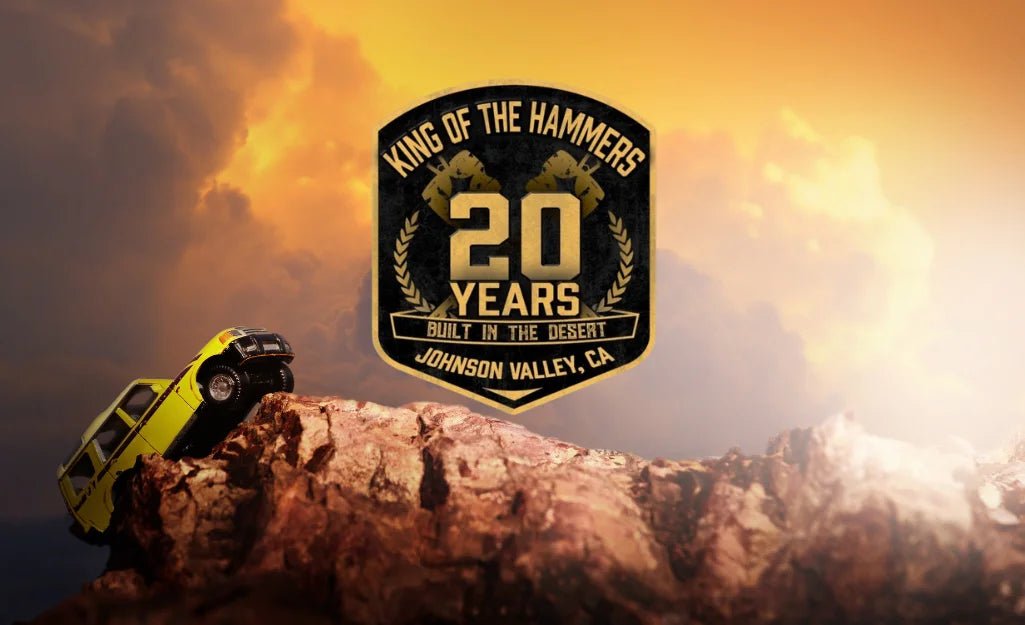
20 Years Built in Hammertown Johnson Valley
Twenty years in the same brutal playground does something to a sport. It stops being theory. It stops being “I heard this mod is good.” And it becomes a kind of desert-made truth: if it survives here, it’s not a cute idea anymore… it’s a priority. That’s what Hammertown has done for off-roading. It turned Johnson Valley into a living lab where builds get tested in public, under pressure, with consequences you can’t edit out later. Every year, the event doesn’t just crown winners—it quietly rewrites what people consider “normal” prep.
But the bigger story — especially at 20 years — isn’t just what breaks. It’s what got built around it.
Here’s the part people miss when they call KOH “just a race”: Hammertown is infrastructure. It’s a temporary city built on the Means Dry Lakebed inside the Johnson Valley OHV Area, with one official entry route — and it becomes the operational center for racers, fans, vendors, and media for the entire event.
And the growth is not “vibes,” it’s measurable. KOH started with a tiny group of friends and a simple challenge… today it’s built into a multi-race event week with hundreds of teams and tens of thousands of attendees, plus a massive online audience following along.
The official event numbers spell it out: 8 races, 770 teams, 80,000 attendees, and 2,500,000 online viewers. That scale is exactly why KOH influences the whole industry… because it’s where parts, setups, and decisions get exposed in public, in brutal conditions, year after year. 
How KOH Builds the Next Generation: Skills, Confidence, and Rig Modding
What Drivers Learn Fast
First lesson: the trail doesn’t care what you meant to build.
KOH punishes “almost ready” builds because the terrain doesn’t negotiate. You don’t get credit for intent… only for what survives the ugly moments: the off-camber drop you misread, the ledge you tagged, the line you thought you could straddle.
Build for the mistakes you will make. That’s why protection that earns its place matters — start with real coverage like jeep body armor before you spend money on anything that only looks cool in the driveway.
Lesson 2: Speed punishes heat; rocks punish panic.
KOH teaches you to respect tempo: desert rewards controlled speed, rocks reward controlled patience. When you rush the wrong terrain, you don’t just lose traction — you spike heat, shock loads, and driver error.
Lesson 3: Visibility is a performance part, not a comfort upgrade.
At KOH, visibility is survival: dust, night runs, shadows in rock gardens, and high-speed decision windows that shrink to seconds. Pros don’t “add lights” to look cool… they buy time to react.
Lesson 4: Air and tire strategy is a skill, not a number.
KOH makes tire pressure a living decision, not a set-it-and-forget-it spec. Pressure changes how the tire acts: footprint, sidewall support, heat build, and how much the wheel gets punished on impact. Think in outcomes: “more grip and compliance” vs “more stability and protection.” Learn to adjust intentionally, not randomly.
Lesson 5: Recovery isn’t for emergencies… it’s for not turning small mistakes into big ones.
KOH drivers treat recovery gear like a seatbelt: you don’t plan to crash, but you plan to not ruin the day when something goes sideways. The fastest teams are rarely the ones who never get stuck… they’re the ones who lose the least time when they do. If your recovery plan requires a miracle (or 6 friends), it’s not a plan.
Lesson 6: The smartest builds protect function first, ego second.
KOH builds confidence by making priorities brutally obvious: protect what ends your day, strengthen what keeps you moving, and don’t spend big money to solve small problems. “Build bigger” is how you create new weak links.
Why “Build Smarter” Beats “Build Bigger”
KOH doesn’t reward the biggest build… it rewards the build that stays functional after hours of vibration, heat, impacts, and driver mistakes. It rewards the one that keeps moving after mistakes.
For everyday off-roaders, that translates into a simple hierarchy: protect the underside and the contact points that take surprise hits. That’s why rigs graduate from “I’ll be careful” to real armor choices like skid plate jeep wrangler—and why platform-specific needs show up fast, like jeep wrangler tj skid plate when you’re hard on a TJ. Toyota owners hit the same wall in different packaging: toyota 4runner skid plates and toyota tundra skid plates aren’t “extra,” they’re how you avoid ending the day with a punched belly and a long, quiet tow home.
Watch the Pros, Steal the Priorities: The “Mod Order” KOH Teaches
King of the Hammers is brutal because it mixes rocks + speed + consequence. That combo teaches a simple mod order you can steal for your weekends: reliability → protection → control → capability. If a mod doesn’t clearly improve one of those, it’s probably a distraction—no matter how good it looks in photos of best jeep aftermarket parts.
Suspension Control & Steering Confidence
KOH proves this fast: rocks and whoops find steering slop immediately. The common mistake is “lift for looks” (hello, jeep wrangler tj body lift) while ignoring geometry, joints, and deflection. Stability at speed and composure in chop matter more than height — because control keeps parts alive.
Start by tightening the system: a steering brace/box reinforcement to stop flex, fresh heavy-duty rod ends/joints so you’re not chasing wobble, and if your axle isn’t staying centered under load, add axle offset plates. This applies whether you’re building jk jeep parts, jeep jku parts, or tj jeep parts — and especially if you’re deep into swaps like jeep tj ford 8.8 swap kit work (and yes, ford 8.8 rebuild kit details matter).
→ Start here: steering brace + high-quality joints/ends + offset plates (if lifted).
Explore our Steering & Suspension collection.

Recovery Readiness: Don’t Be the Bottleneck
Even pros get stuck. The difference is they recover fast, safely, and keep moving. The weekend-killer mistake is showing up with one random strap and no plan.
Build a system: pick one of the Mojab Offroad kits (Basic/Pro/Extreme) based on your travel level, then add smart add-ons like traction boards and a hydraulic jack for controlled lift when you’re hung up. Recoveries go smoother when connections are clean (soft shackles), angles are managed (recovery ring/snatch tools), and gear is organized so you’re not digging in the dirt for hardware. This matters across platforms—4runner offroad parts, aftermarket ford parts, and even gm parts and accessories rigs all get stuck the same way.
→ Start here: kit + traction boards + compact jack.
Explore our Recovery Gear collection.

Underbody Armor: Jeep skid plates Before Cosmetic Mods
KOH punishes the belly first. The classic mistake is spending on bumpers and lights while your oil pan and transmission are still one bad hit away from ending the day.
Must-have coverage comes in this order: oil pan + transmission, then transfer case, then fuel tank if your trails drag the rear third. Armor that’s “good enough” becomes a pry bar when it folds; real plates turn impacts into slides.
→ Start here: oil/trans skids first, then expand coverage.
Explore our Skid Plates collection.
Air & Inflation: Start With Control, Not Power
Tires are the fastest performance mod on earth — because PSI is traction, comfort, and fewer breakages across rock-to-desert transitions. The mistake is owning air tools but not having a repeatable routine. KOH-level teams treat pressure like a tuning knob: quick air-down for bite, quick air-up for heat control and road stability.
Start with an arb twin air compressor (or arb air compressor if your needs are lighter), then add deflators for fast, even air-down, plus a tire gauge with bleed tool and a digital inflator/deflator for precise final numbers. This isn’t just for Jeeps — toyota 4x4 parts builds benefit just as much.
→ Start here: compressor + deflators + gauge/bleed + digital inflator.
Explore our Tire & Inflation collection.

Visibility: See the Line, Finish the Day
Dust and night don’t care how experienced you are… if you can’t see the line, you can’t drive it. The mistake is chasing “bright” without beam control, which turns dust into a white wall and fatigues you faster.
Build in layers: a proper fog pattern for weather and dust, A-pillar/ditch lights for cornering and peripheral hazards, and a controlled light bar setup for distance when speed rises. This complements every build style—from jeep wrangler jl front bumper setups to ford parts and accessories (yes, even the messy reality of accessories ford bronco searches) and toyota 4runner parts and accessories.
→ Start here: fogs + A-pillar mounts + correctly aimed bar/pods.
Explore our Lighting & Visibility collection.

Power: When Electronics Become the Weak Link
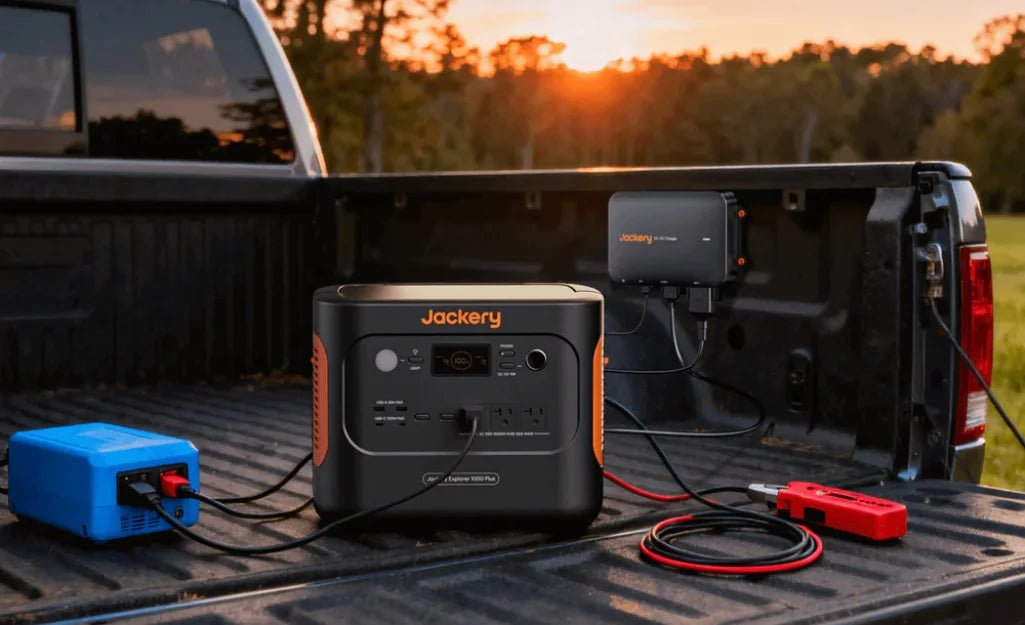
Winch + lights + compressor is where “stock electrical” quietly fails. The mistake is adding accessories without protecting voltage, wiring, and mounting. KOH teaches redundancy: a dual-battery style foundation, clean fused distribution, and secure mounts so vibration doesn’t kill connections mid-recovery.
This is the unsexy backbone behind reliable jeep offroad parts, toyota aftermarket parts, aftermarket toyota parts, gm aftermarket parts, and yes — ford parts online shopping lists.
→ Start here: battery foundation (mounting + protected distribution) before adding more draw.
Explore our Battery Systems & Accessories collection.

Storage + Fuel: Keep Weight Secure and Range Real
KOH-speed chaos magnifies a simple truth: loose weight breaks things. The mistake is stacking “trail stuff” wherever it fits—until it becomes a projectile or ruins balance. Secure storage keeps gear accessible, quiet, and predictable; proper fuel storage keeps range honest when detours happen. Start with a secure fuel solution (container + real mount), then build a dedicated home for recovery gear so it’s always ready. This matters whether you’re running jeep yj aftermarket parts, jeep tj custom parts, or toyota truck aftermarket parts.
→ Start here: secure fuel storage + a repeatable storage system.
Explore our Fuel Storage collection.

Final Thoughts
KOH is basically a stress test for priorities: keep the rig functional, protect what ends your day, and build control before you chase “cool.” If you steal just that mindset, you’ll waste less money, break fewer things, and have way more weekends that end with a drive home instead of a rescue plan.
If you want to follow along (or plan your viewing), here’s the official 2026 King of the Hammers schedule (Jan 22–Feb 7).

Leave a comment
This site is protected by hCaptcha and the hCaptcha Privacy Policy and Terms of Service apply.